


Cavity Treatment

歯科ハミール高田88 Director
Masashi Motegi
Hello, I’m Masashi Motegi, the director.
Tooth decay is a disease that tends to progress with almost no noticeable symptoms in its early stages. At 歯科ハミール高田88, guided by our philosophy of “hospitality,” we’re mindful of pain, of course, and we also take the time to explain the points patients tend to worry about, such as cost and the number of visits, before moving ahead with treatment.
What I focus on in treating tooth decay is keeping the amount I remove to a minimum and preserving the nerve and the tooth wherever possible. Alongside my training in oral surgery at a general hospital and my studies at a university hospital, I keep bringing new knowledge from day-to-day study groups and seminars into treatment aimed at extending the life of your teeth.
Takadanobaba is also where I grew up. If you “have a toothache but don’t like going to the dentist,” you can come talk to us without worry.
What Is Tooth Decay?
What Is Tooth Decay (Dental Caries)?
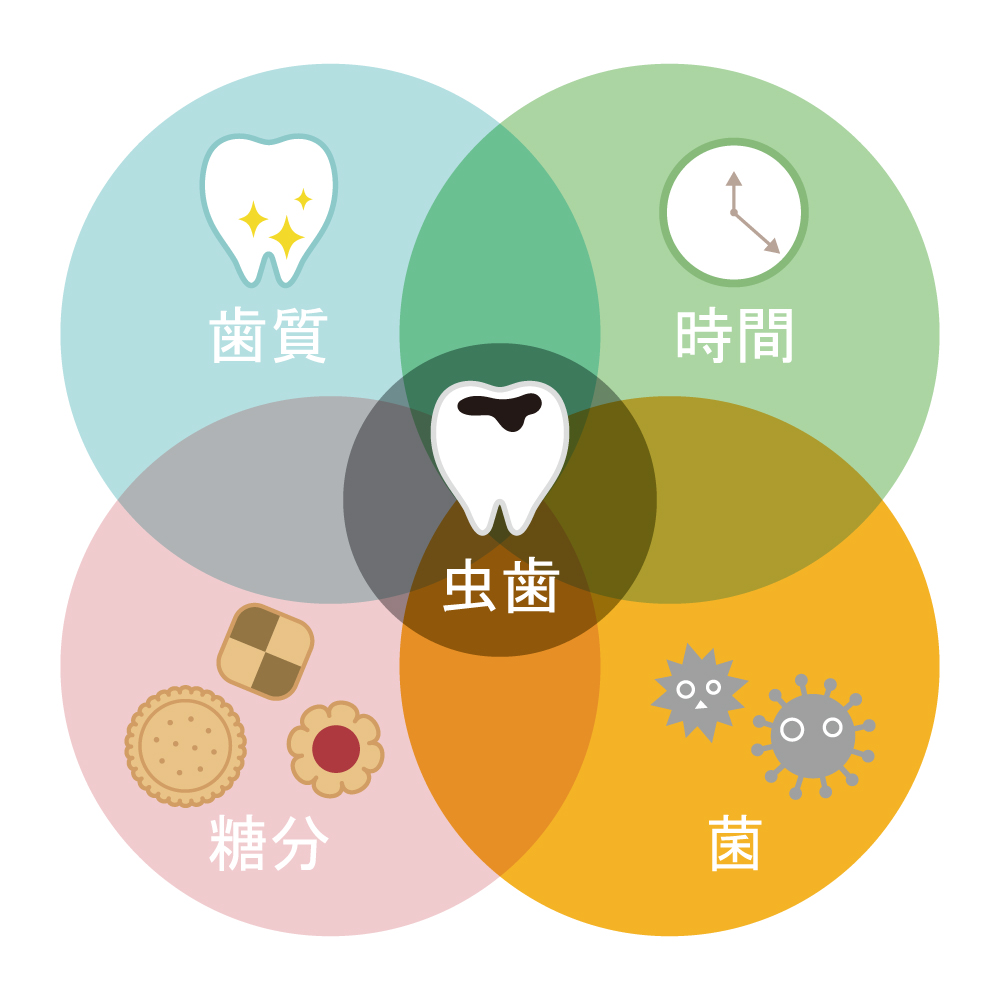
Tooth decay (known in dental terms as “caries”) is an infectious disease in which acid produced by bacteria metabolizing sugar from food and drink dissolves the hard tissue of the tooth (demineralization). Inside our mouths, two processes occur in a continuing cycle: demineralization by acid, and “remineralization,” repair by the calcium and phosphate in saliva. However, when frequent sugar intake or poor plaque control upsets this balance and demineralization keeps outpacing remineralization, the tooth’s structure can break down and form a cavity over time.
Once a cavity has formed, it will never heal on its own, and as it progresses the bacteria can reach all the way to the nerve (the pulp). Decay that develops again in a tooth that has had treatment is called “secondary caries,” and it’s also a major cause of needing retreatment. Falling into a “repeat restoration cycle” of treatment and recurrence means the area that has to be removed keeps growing, which can lead to tooth loss over time. Our clinic takes a specialized approach aimed at breaking this negative cycle and preserving your teeth for a lifetime.
Stages of Tooth Decay and Our Specialized Approach
Tooth decay is classified from “C0” to “C4” according to how far it has progressed. Our clinic also draws on the thinking behind ICDAS, an international diagnostic standard, to provide the treatment best suited to each stage.
Stages and Symptoms of Tooth Decay
C0 (Early Decay)
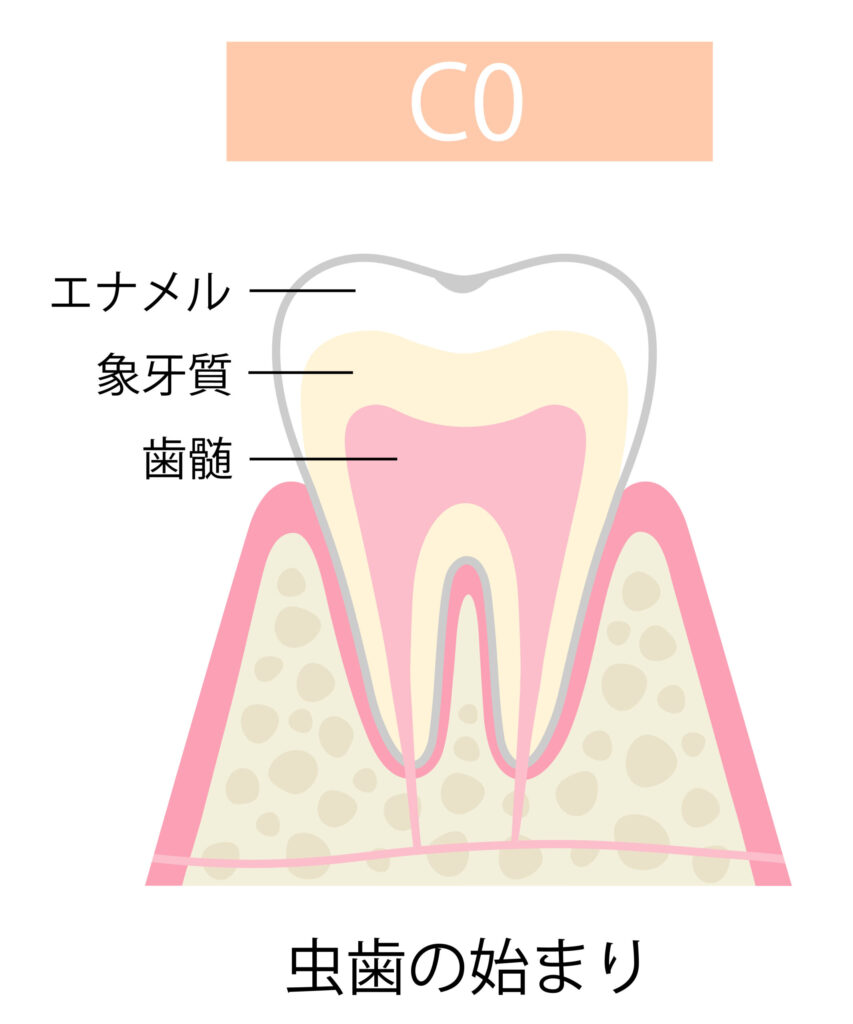
At this stage, the enamel surface turns cloudy white or brown, but no clear cavity (hole) has formed yet. We don’t drill at this stage. Non-invasive remineralization therapy, with fluoride application and proper brushing, can hold back the progression and help the tooth recover.
C1 (Decay in the Enamel)
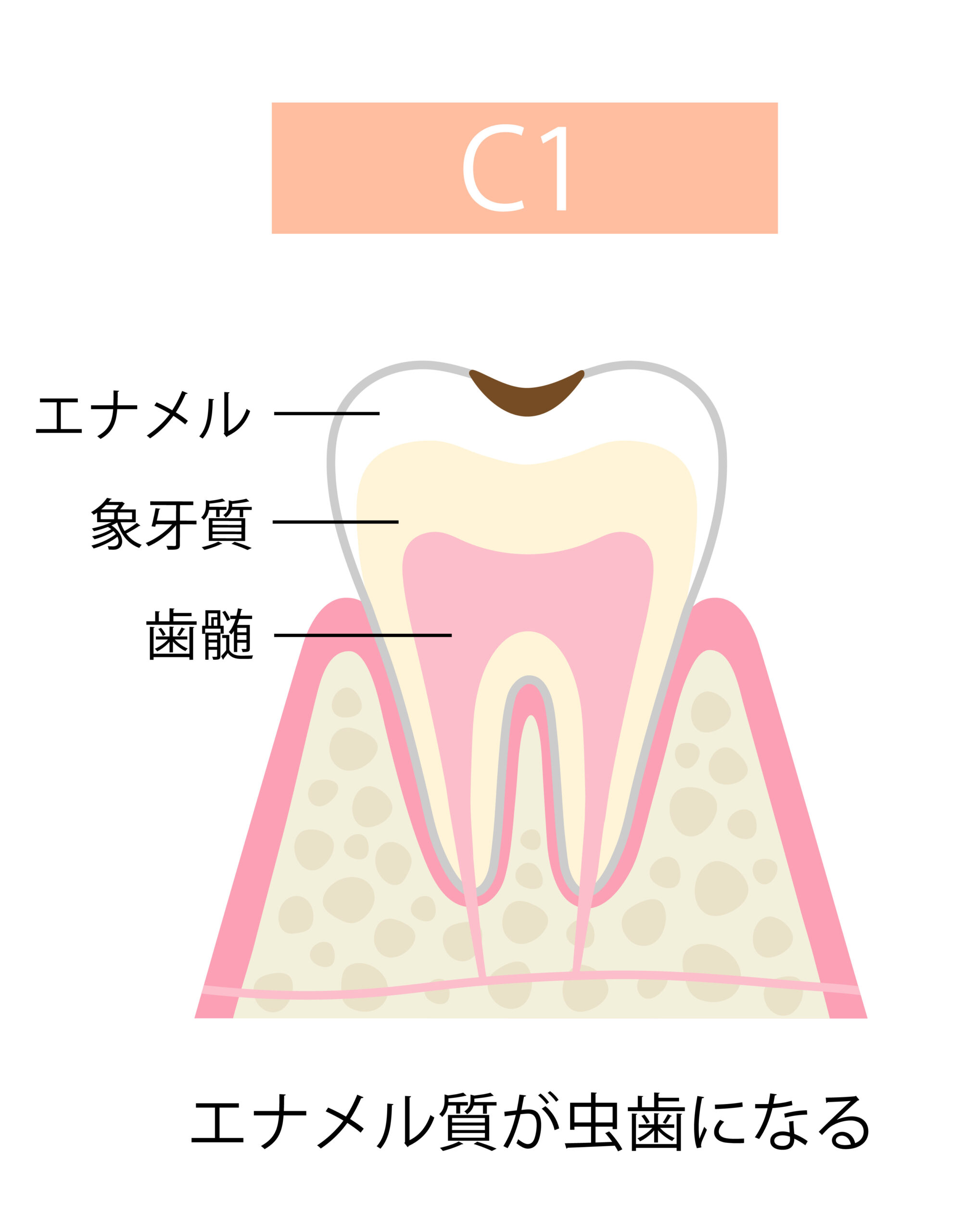
At this stage, a small cavity limited to the enamel is present. Cold foods or drinks may cause sensitivity, but there isn’t much pain. We remove only the minimum amount of infected enamel and restore the tooth with a composite resin with a strong adhesive bond (a dental plastic). Using a fluoride toothpaste at this point can still help the tooth heal through remineralization.
C2 (Decay in the Dentin)
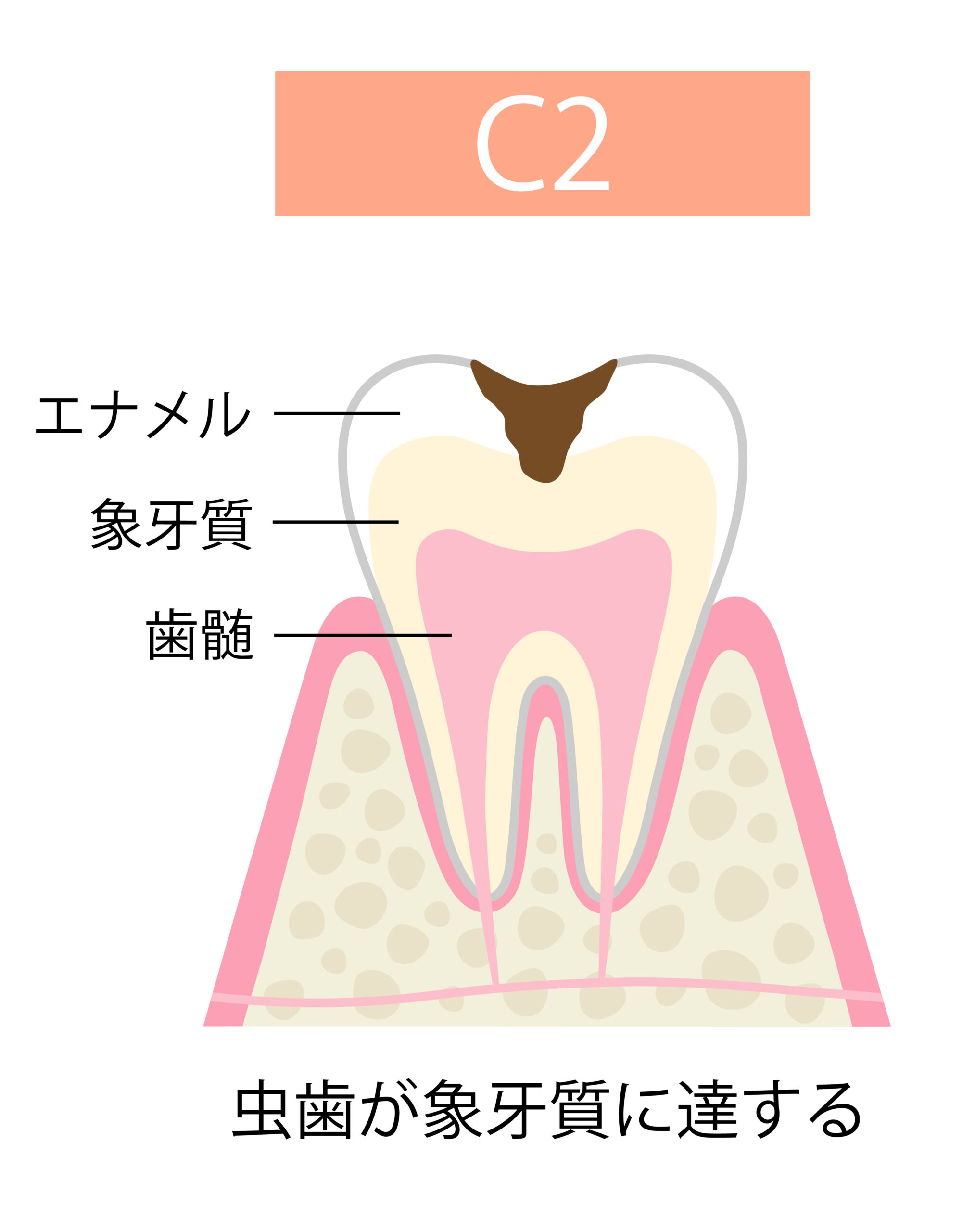
At this stage, the decay has progressed into the dentin beneath the enamel. Cold or sweet foods start to cause sensitivity, and you may sometimes feel pain. Because dentin is softer than enamel, decay tends to progress faster from this stage on.
Treatment involves removing the decayed area and restoring it with a filling or a crown. A smaller area of decay calls for a filling, while a larger one requires a crown. If the decay is close to the nerve, we may first carry out a procedure to protect the nerve before placing the filling.
C3 (Decay That Has Reached the Nerve)
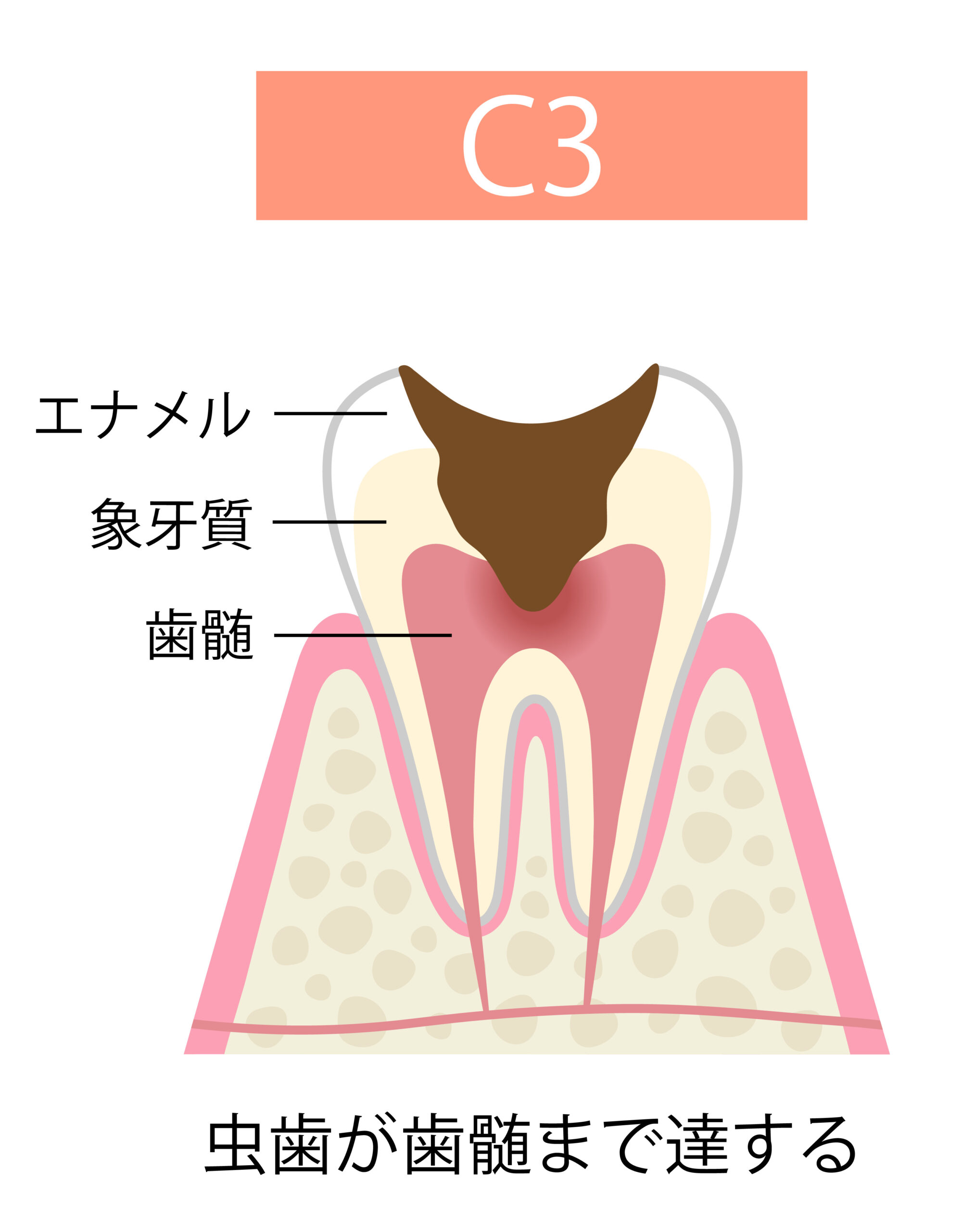
At this stage, the decay has reached the nerve, causing strong pain. The tooth has severe throbbing pain even without any stimulus, and touching it with something cold or hot brings on sharp pain.
At this stage, root canal treatment to remove the nerve is needed in most cases. After removing the nerve, we clean and disinfect inside the root, fill it with medication, and restore the tooth with a crown.
When conditions allow, we may also offer “Vital Pulp Therapy (VPT)” to preserve the nerve. If the inflammation is irreversible, we use the root canal treatment described above, with a focus on infection control.
C4 (The Crown Has Broken Down)
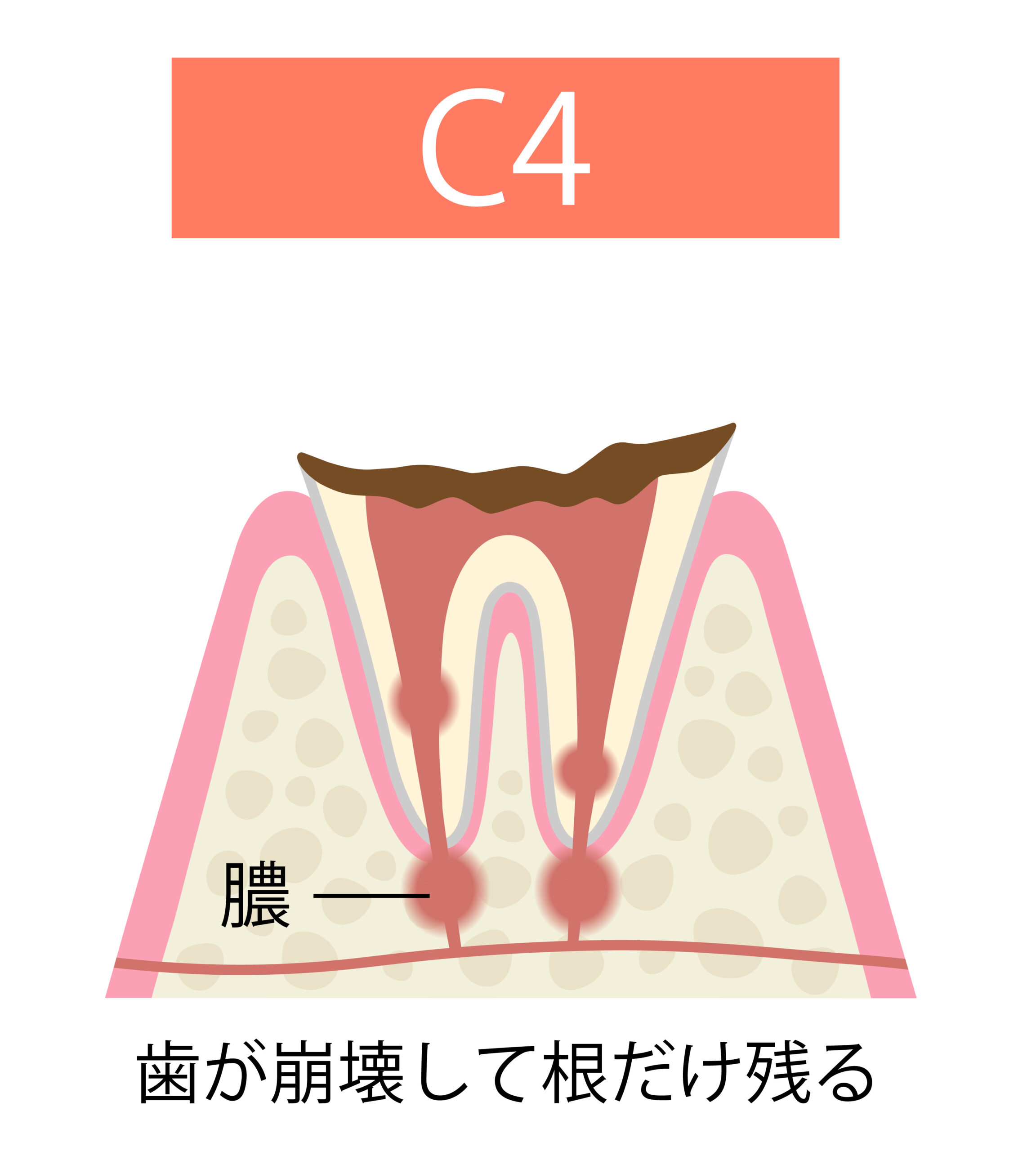
At this stage, most of the tooth has broken down, leaving only the root. Because the nerve has already died, the pain may subside for a time, but once pus collects at the tip of the root, severe pain and swelling can return. Left untreated, this can even lead to the jawbone being eroded or the whole face swelling.
Once decay has progressed this far, extraction is necessary in many cases. However, depending on the condition of the root, it may still be possible to carry out root canal treatment and restore the tooth with a crown. If extraction is needed, we restore function with an implant, a bridge, or a denture.
Features of Our Cavity Treatment
Treatment That Protects Your Tooth and Prioritizes Keeping the Nerve
Treatment Mindful of Your Tooth, Based on the MI (Minimal Intervention) Philosophy Guided by the MI (Minimal Intervention) philosophy advocated by the FDI (World Dental Federation), we place great importance on preserving as much healthy natural tooth structure as possible. When we drill, we use a caries-detecting dye that stains only the infected layer of dentin, to guide the removal of infected tissue and avoid cutting away more than necessary.
Vital Pulp Therapy (VPT): Protecting Your Tooth’s Future by Preserving the Nerve A tooth that has lost its nerve is cut off from the blood supply that nourishes it, becoming brittle like a dead branch, and the risk of later extraction due to a root fracture or similar problem increases. Even with decay deep enough to reach the nerve, our clinic takes on the challenge of preserving the nerve wherever possible, using Vital Pulp Therapy (interim indirect pulp capping) with MTA cement or a calcium hydroxide preparation to sterilize the infected dentin and encourage the formation of tertiary (reparative) dentin.
A Treatment Environment Mindful of Pain
We use topical anesthetic and an electronic anesthesia device to help minimize pain during treatment. To ease the discomfort of the needle, we apply a topical anesthetic to the surface of the gum before injecting. An electronic anesthesia device delivers the anesthetic at a slow, steady rate, which also reduces the pain caused by pressure. We aim to ease your anxiety and create an environment where you can relax during treatment.
Precise Diagnosis and Treatment
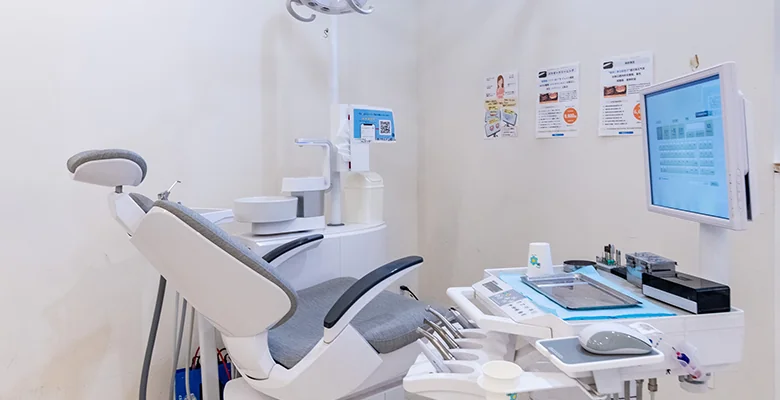
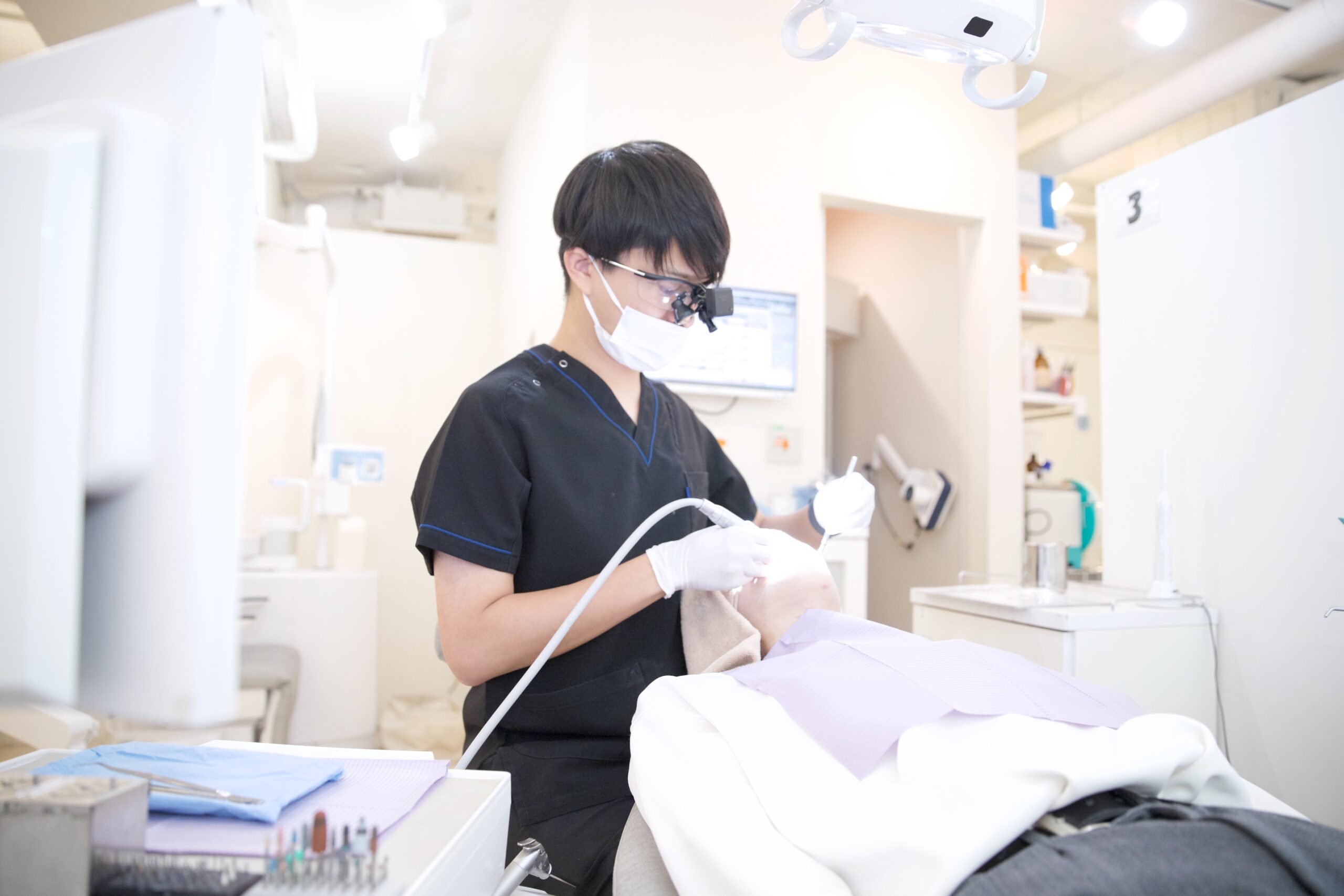
We use high-magnification loupes, carrying out treatment while checking fine details that are hard to see with the naked eye. This helps prevent any decay from being left behind, while also avoiding excessive removal of healthy tooth structure. We also have dental CT on hand, making three-dimensional diagnosis possible when needed.
How Cavity Treatment Works
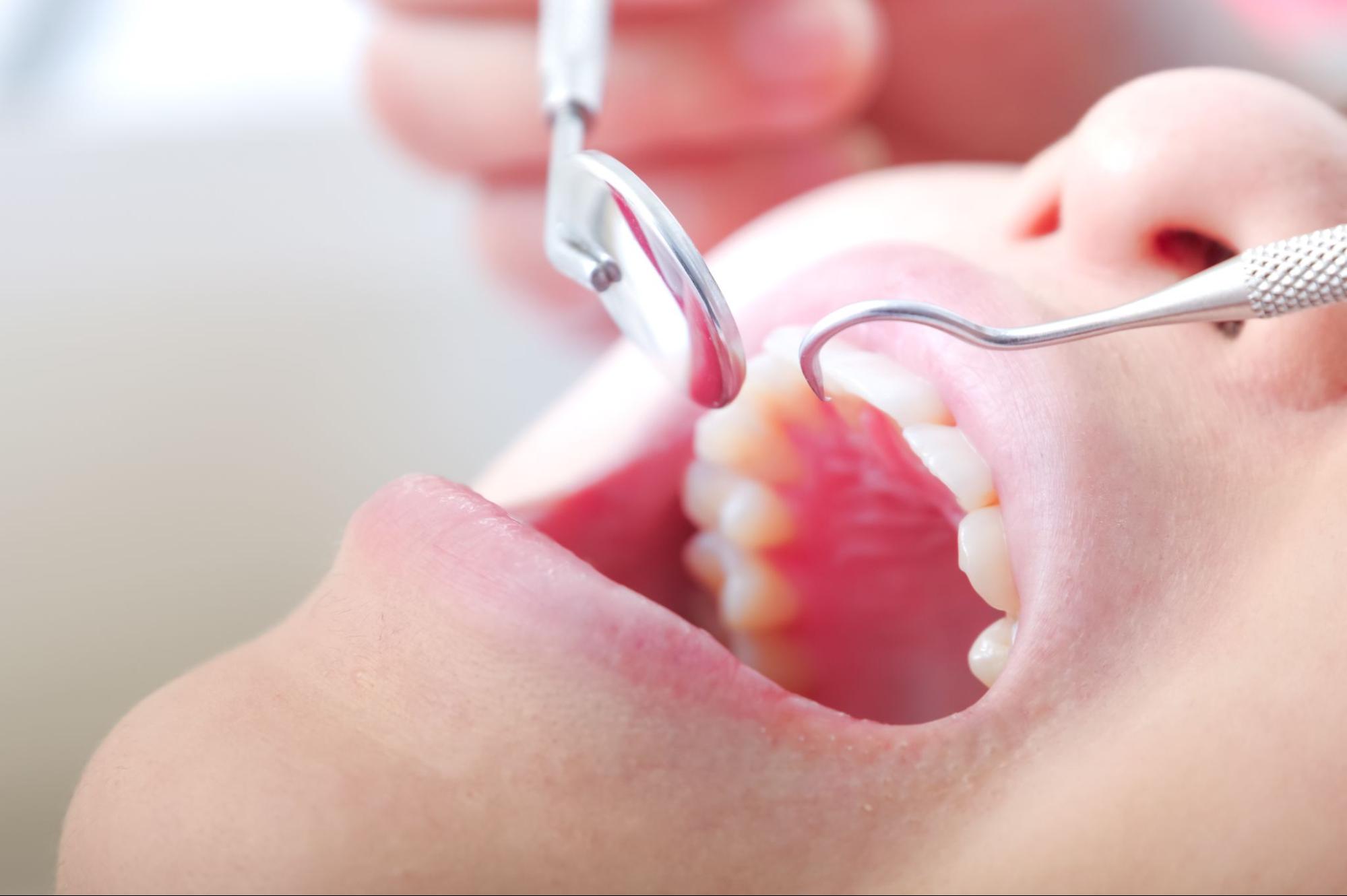
Medical History & Counseling
Please tell us in detail about what’s troubling you: how much it hurts, where, and how long you’ve had the symptom. You can ask us about anything, such as worries about treatment, the cost or your visit schedule. We’ll work with you to design a treatment plan that matches what you want. Our clinic also has foreign staff on hand, and we can communicate in several languages, including Chinese.
Examination & Diagnosis
X-rays and CT imaging help us identify the location and depth of the decay, as well as the condition of the root. Through a detailed examination of hidden decay and the state of the root, we can determine the best treatment approach.
Explaining Your Treatment
Based on the examination results, we explain your current condition and the treatment you need in clear terms. When there is more than one treatment option, we describe each one’s features, cost, and duration and let you choose. We only begin treatment once you’re comfortable with the plan, so there’s no need to worry.
Removing and Treating the Decay
After controlling pain with a topical anesthetic and an electronic anesthesia device, we take the time to remove the decay. Using high-magnification loupes together with a caries-detecting dye, we precisely remove only the infected area. For deep decay close to the nerve, we may also carry out a procedure to protect the nerve using MTA cement.
Restoring the Tooth
We restore the area we’ve drilled with a filling or a crown, bringing the tooth back to its original shape. You can choose from an insurance-covered white filling up to a self-pay ceramic restoration, depending on the look and strength you want. Because we’ve got dental laboratory equipment on site, we can also handle fine adjustments on the spot.
Regular Maintenance
To help your treated tooth last, we recommend a checkup every 3 months. We check for any recurrence of decay and clean your teeth, protecting the health of your whole mouth.
Maintenance After Treatment

Maintenance After Treatment (Preventing Secondary Decay) A treated tooth is at very high risk of “secondary caries,” decay that returns at the boundary between the tooth and the filling or crown, a different material, where plaque tends to collect. The bonding cement can also degrade over the years, opening tiny gaps that let bacteria in. Preventing this and stopping the repeat restoration cycle takes both proper self-care at home (such as a toothpaste with a high fluoride concentration) and professional care at the dental clinic (such as PMTC or tartar removal) working together.
Our clinic recommends a checkup every 3 months. At each checkup, a dental hygienist carries out professional cleaning (PMTC), tartar removal, and a fluoride application. We also provide brushing guidance, helping improve the quality of your self-care at home to prevent decay from coming back.
We also use Airflow (EMS), which removes surface staining and biofilm. Keep your mouth healthy for the long term with regular maintenance.
Common Questions
Does cavity treatment hurt?
We use a topical anesthetic and an electronic anesthesia device to help reduce pain. Once the anesthesia has taken effect, how much pain you notice during treatment varies from person to person. If you’re anxious about pain, please let us know beforehand.
How many visits does cavity treatment take?
It depends on how far the decay has progressed. Early decay can sometimes be treated in a single visit, but if nerve treatment is needed, several visits are required. We’ll explain the treatment plan at your first visit, so there’s no need to worry.
Can I replace a metal filling or crown with a white one?
Yes. It can be changed to an aesthetic material such as ceramic or zirconia. These materials look natural and carry no risk of a metal allergy.
What happens if tooth decay is left untreated?
Tooth decay never heals on its own, and if left untreated, it keeps getting worse. It can lead to tooth loss over time, and may also affect the tooth next to it. If the nerve dies, pus can collect at the tip of the root, and this can cause facial swelling or affect your overall health. We recommend seeing a dentist early.
Considering Cavity Treatment in Takadanobaba?

歯科ハミール高田88 is a 1-minute walk from Takadanobaba Station. We’re also open on weekends, making it easy to visit after work or school. If you’re troubled by the pain of a cavity or feeling anxious about treatment, talk to us first. We value hospitality and provide treatment that’s attentive to each patient.